Manufacturing Guides
Cutting Edge Quality: Grinding, Deburring and What to Accept
Not every sharp edge needs grinding. Learn what good cut quality looks like, when deburring is worth paying for, and how to specify it on your drawing.
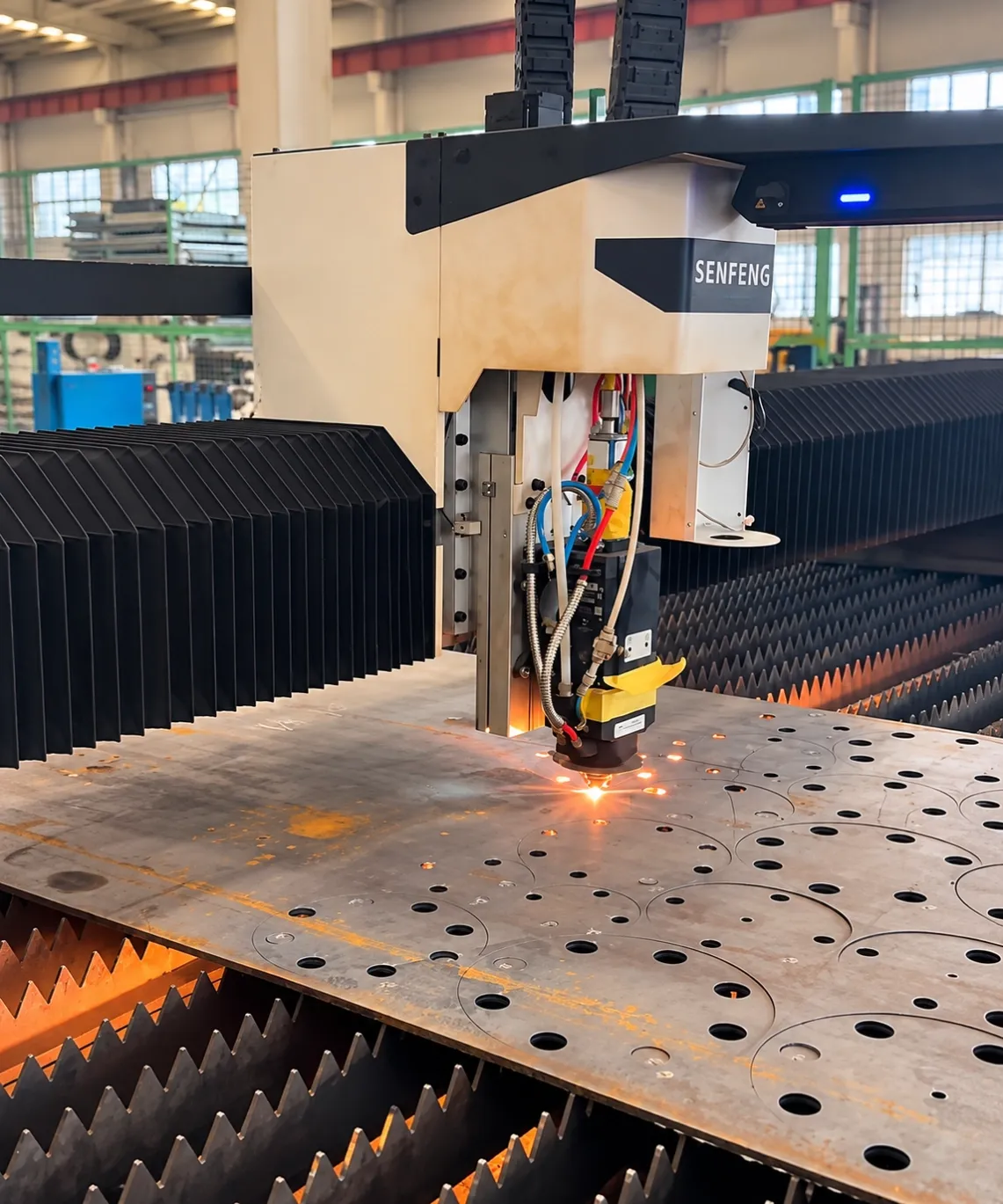
A crate of cut parts arrives, and the first thing you do is run a thumb along an edge. It feels sharp. Is the part wrong? Not necessarily — a laser-cut steel edge usually comes off the machine smooth but sharp. Good edge quality is four things at once: the cut face is close to square, its surface is not too rough, there is no hard dross stuck to the bottom edge, and the edge suits whatever happens next — welding, coating, handling or assembly. A sharp edge is not automatically a bad edge, and a ground edge is not automatically a good one. The numbers here are industry standards and published supplier guides; your own acceptance is set by your drawing and your agreement.
What Does "Good Edge Quality" Actually Mean?
Four things decide it, and they are worth keeping separate, because each one is fixed a different way. Perpendicularity is the first: how close the cut face is to a true 90 degrees. A face that leans will not sit flat in a fixture and will not weld square, and the lean grows with thickness. Our guide on plate thickness walks through where the cost and the edge work change as the plate gets thicker. Surface roughness is the second: the drag lines on the cut face. A fine, even pattern is normal; deep, irregular grooves usually mean the parameters drifted — focus, gas pressure, speed or a worn nozzle — and the fix is a test cut, not a bigger grinder.
Dross is the third: molten metal that did not clear the cut and solidified on the bottom edge. It is the most common thing buyers object to, and it lives on the underside — the top face can look clean while the bottom carries a hard bead. Stainless is notorious for a thin, hard black line of dross; on mild steel, heavy dross usually points to a settings problem. The oxide layer is the fourth, and the easiest to forget. Oxygen-assisted cutting leaves an oxide film on carbon steel and a heat tint on stainless — a weaker bond surface than blasted steel — and coating peels first where it is thinnest, over a sharp edge.
How Do You Put an Edge Requirement on a Drawing?
Most edge arguments start with a drawing that says nothing useful. A bare note reading "deburr" does not say which edges, how much material to remove, or what the finished edge should look like — and removing a burr does not correct a leaning cut face or smooth the surface texture. If you want a result, describe the result.
The shared language is ISO 9013, the international standard for grading thermal cuts. It covers laser cutting from 0.5 to 40 mm, plasma from 1 to 150 mm and oxy-fuel from 3 to 300 mm, and grades an edge on two measurements: perpendicularity tolerance (u) and mean profile height (Rz5) — the average peak-to-valley striation height on the cut face. Both are sorted into four quality ranges, Range 1 the tightest and Range 4 the loosest, and the worse of the two measurements decides the range — a cut that is Range 1 on squareness but Range 3 on roughness is a Range 3 cut. On a 10 mm plate, Range 1 allows a deviation of 0.08 mm and a roughness of 16 microns; Range 4 allows 1.0 mm and 128 microns. Published guides put typical fibre-laser results at about 28 microns Rz5 on 5 mm mild steel and about 58 microns on 10 mm — Range 2 and Range 3 respectively — while plasma work commonly lands in Range 2 to 4.
You do not need to memorise the table. Two habits cover most of it: name the standard and the range — "ISO 9013 Range 3" is a requirement a supplier can quote against, while "good quality" is not — and say which edges it applies to, treating texture, angle and attached dross as three separate items. One blanket note for every edge is how buyers pay for grinding they never needed.
What Do Grinding, Deburring and Edge Rounding Each Actually Do?
Buyers use three words as if they meant the same thing. They do not, and the price difference is the reason to keep them apart.
Deburring removes the burr — the sharp lip, ragged edge and dross left by cutting. On laser and plasma parts most of it is dross on the bottom edge, plus the small nubs left where micro-joints held the part in the sheet. Deburring does not change the shape of the edge; it takes the unwanted material off it. It can be done by machine — parts travel on a conveyor under abrasive belts or brushes — the practical route when parts are big enough for the machine. Small, intricate parts under about 6 by 2 inches often cannot go through a machine at all and have to be deburred by hand, which adds significant cost.
Grinding is the heavier operation: it removes more material, levels a weld, or reshapes an edge. Tabs left from cutting are ground off after the part is broken out of the sheet, and a weld seam is ground flush where the surface has to be flat. On 8 mm and above, oxygen-cut mild steel shows a high dross tendency, and heavy slag on the underside is ground rather than deburred.
Edge rounding goes a step further than deburring: instead of just removing the burr, it gives the edge a small radius. The point is the coating. A rounded edge holds paint and powder coat evenly; a sharp corner leaves the coating thin, and that thin spot is where corrosion starts. OEMs and tier-one suppliers increasingly ask for a defined, documented edge radius on coated parts. If you need a softened edge, state the radius outcome instead of writing "deburr" and hoping the supplier guesses.
Deburring removes what should not be there, grinding reshapes what is there, and edge rounding changes the shape on purpose. Quote them as three separate lines, because they are three separate costs.
When Does an Edge Need Grinding or Deburring — and When Doesn't It?
Deburring and grinding add cost and time to every part they touch. What drives the price is the work, not the steel: edge length, one side or both, and machine or hand — hand work on small intricate parts is the expensive case. There is no blanket rule that every laser-cut part must be deburred. The right question is which edges need what treatment, and the answer comes from three checks: will someone handle the part, what happens to it next, and will the edge interfere with assembly.
Parts that need it are easy to recognise. Anything going to powder coating or anodising needs clean, slightly rounded edges, because coatings go thin over sharp edges and lift over dross — that is where rust and peeling start. Stainless and aluminium parts that will be welded need clean edges, and burrs that stop parts fitting together slow assembly and cause rework. Anything decorative or visible needs it, and any edge workers will grip needs the sharp projections removed — a burr cuts whether or not the part is painted.
Parts that may not need it are just as real. Structural mild steel that will be welded, then grit-blasted before galvanising or painting, gets its edges cleaned by the blasting, and parts the customer will grind during their own assembly may not need it either. Leave deburring out only as a written, agreed decision on the quote — ask your supplier which edges they propose to treat and which to leave, and get that list on the quote.
How Do You Check an Edge Before You Accept the Parts?
A first-off inspection — the first parts off the machine, measured before the batch runs — catches most edge problems while they are still cheap to fix.
Start with the features the next operation consumes: blank size, two hole positions from a single datum, kerf measured on a scrap leg, cut-face angle, and dross on the bottom face. Run a gloved finger along the bottom edge where the dross lives, not just the clean top. Check holes separately: as a widely used rule, a hole smaller than about 1.2 times the plate thickness in oxygen-cut mild steel is where most rejections start, because the hole comes out tapered and hard to clear.
A photograph of an acceptable edge, attached to the order, settles more arguments than a paragraph of adjectives. When a batch arrives, check the edges that matter — the weld edges, the coated edges, the handled edges — rather than inspecting every millimetre of every part.
If an edge fails, name what failed: "Range 3 roughness but Range 4 taper on the 10 mm plate" tells the supplier where to look. Most edge complaints trace back to focus position, gas pressure, cutting speed or nozzle condition — ask the supplier to run test cuts on scrap and re-check.
What Should Your RFQ Say About Edge Quality?
Five things on the RFQ prevent most edge arguments.
First, name the edges that matter: weld, coated, handled, hidden — the supplier cannot price the difference unless you say so.
Second, state the acceptance in words a supplier can measure: an ISO 9013 range — edition, range, and which characteristics it covers — or the plain version: no dross on the bottom edge, cut face square within an agreed tolerance, roughness acceptable to the sample. Either way, attach the sample or the photograph.
Third, say what the next operation is — welding, coating, assembly and handling each set a different edge requirement; the edge for a weld-preparation part is a job of its own — see our bevel cutting guide for what it must look like before welding starts. Fourth, ask who does the work: deburring, grinding and edge rounding should be separate lines on the quote, priced from the part — quantity, size, edge length, one side or both, machine or hand work. If the quote has no edge line, ask whether the edge work is included or excluded — never assume.
Fifth, ask for the first article. A sample edge on your material and thickness, approved before the batch runs, is the cheapest inspection you will ever buy. The most expensive edge is the one you argue about after delivery.
FAQ
Do laser cut parts need deburring?
Most do, but not all. Aluminium edges often come out bumpy; steel and stainless come out smooth but sharp, and stainless carries a hard line of dross on the bottom edge. Parts going to coating, welding or customer handling still benefit; structural mild steel that will be welded and then blasted before galvanising or painting often does not need it.
What is the difference between deburring, grinding and edge rounding?
Deburring removes burrs and dross without changing the edge shape; grinding removes more material; edge rounding gives the edge a small radius so coatings cover it evenly. Ask for them as separate lines on the quote.
What ISO 9013 range should I ask for?
It depends on the part. Range 1 and 2 suit precision work where the edge is visible or must fit tightly; Range 3 is common for general fabrication; Range 4 covers rougher structural work. Name the range, the edition and the characteristics it covers — the worse of the two measurements decides the range. If in doubt, ask the supplier what range their process holds on your thickness, and write it down.
Send your drawing with the edges that matter marked and the next operation each edge is going to — and ask your supplier to quote deburring, grinding and edge rounding as separate lines, with a first-article sample. If the edge will be welded, read our bevel cutting guide first. VEHOON cuts steel plate to customer drawings, with further CNC machining, welding and assembly available when required, and inspection to the drawing and agreed requirements.