Manufacturing Guides
How Plate Thickness Drives Cutting Cost and Lead Time
Plate thickness drives cutting cost twice: more steel per part, and slower cutting. Learn where the cost jumps, what stretches lead time, and how to choose.
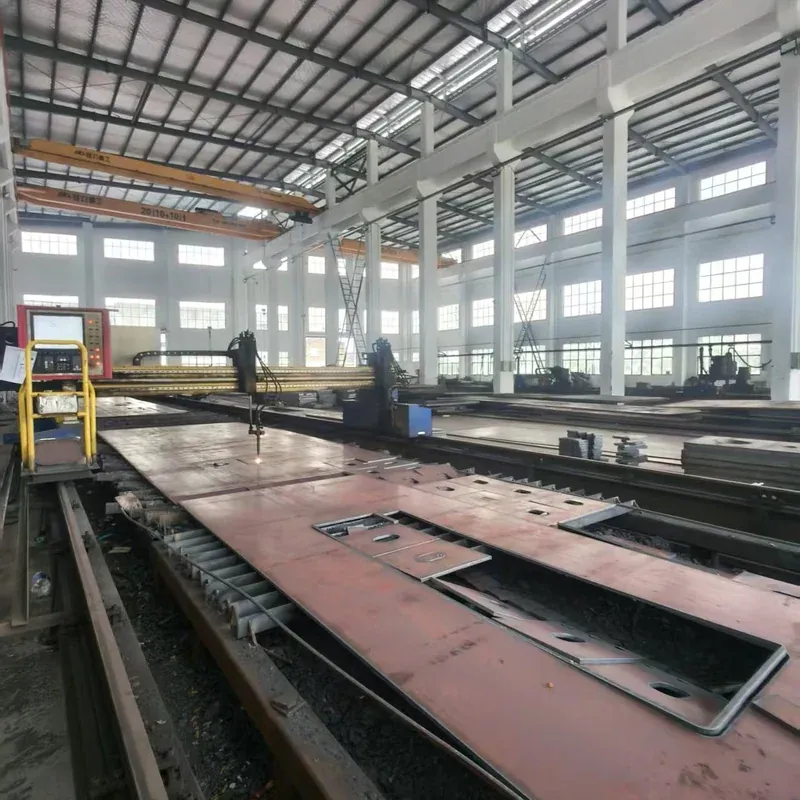
Plate thickness drives cutting cost two ways at once. First, the steel itself: double the thickness and you double the kilograms you pay for, on the same outline. Second, the cutting: the thicker the plate, the slower the cut, so machine time climbs faster than thickness does. On identical geometry, doubling the thickness can more than double the cutting time. Lead time stretches for the same reasons, and thicker plate often forces a different cutting method and more edge work. This guide is for buyers who put a thickness on a drawing or an RFQ and want to know where the money and the days go. It explains the cost curve, where the process changes, and how to choose a thickness you can defend. It is not a quote: price and lead time are assessed per project.
Why Does Doubling the Thickness More Than Double the Cutting Cost?
Picture this: you ask for the same bracket in 6 mm and in 12 mm plate, and the thicker quote comes back at more than twice the price. Your first thought is that the supplier is padding the number. The likelier explanation is that thickness charges you twice — and only one of those charges is the steel.
The first charge is the material — the honest, linear one. Steel is bought by weight, so a 12 mm plate holds twice the kilograms of a 6 mm plate of the same outline. On a simple flat part with a short cut length, this is most of the price.
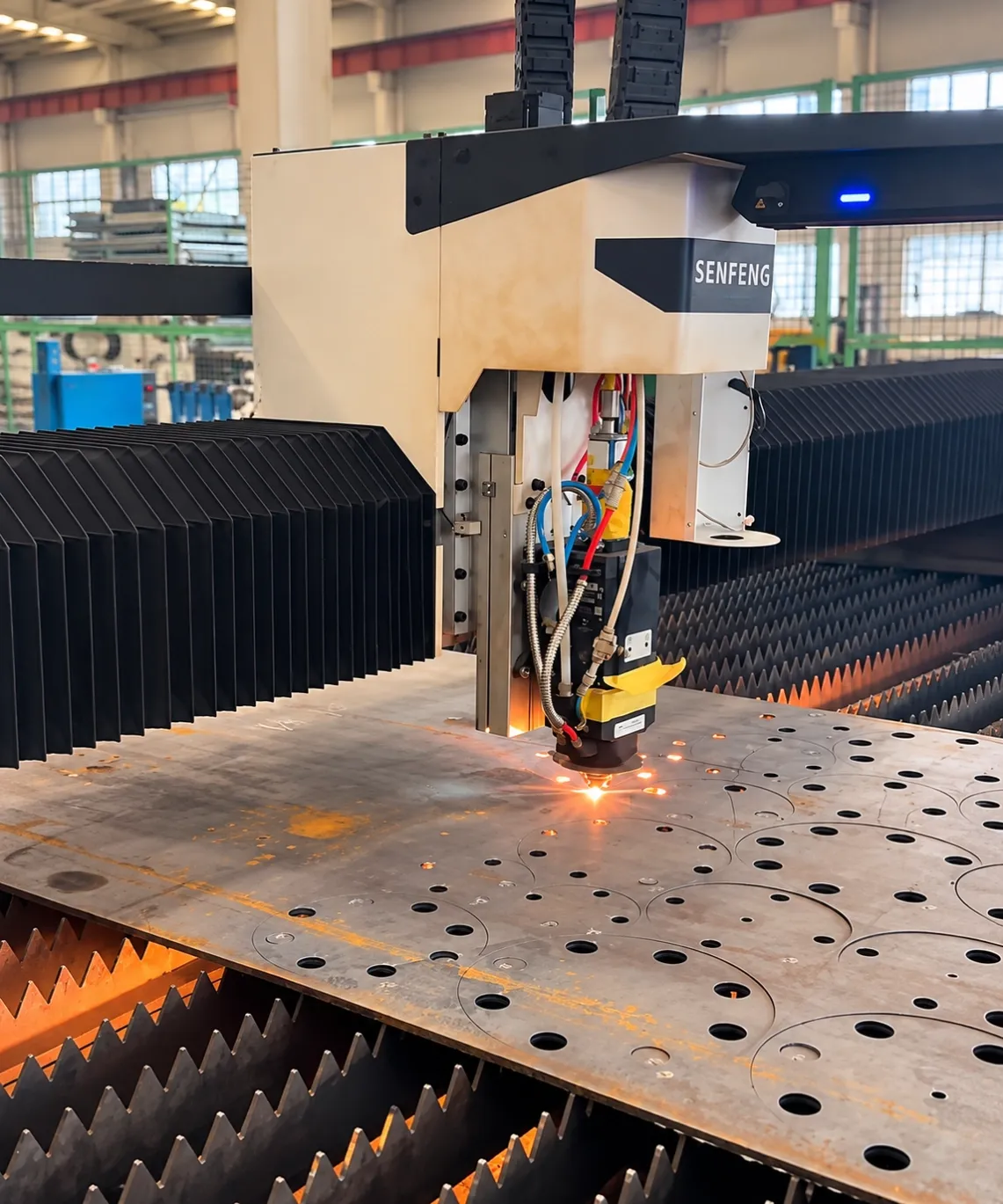
The second charge is the machine time, and this one bends upward. A cutting head has to melt or burn its way through more metal, and the thicker the plate the slower it must travel to keep the edge clean. Published supplier planning figures make the point concrete: one guide puts mild steel cutting at about 24 metres per minute at 1.2 mm, falling to about 4 at 6 mm; another at roughly 800 inches per minute at 2 mm and about 50 at 10 mm. The numbers differ by machine and material, but the shape of the curve does not. Every pierce takes longer too, thicker plate needs more assist gas, and heat builds up, so the operator may slow down or pause to stop the part warping.
So the cost curve is not a straight line: each extra millimetre adds steel and slows the cut. A buyer who understands this stops arguing about the cutting rate and asks the two questions that move the price: how many kilograms of steel does each part consume, and how many minutes does its outline need.
When Does Thickness Force a Different Cutting Method?
Every cutting method has a thickness range where it is fast and clean, and a point beyond which it struggles. Laser cutting is quick and precise on thinner plate, but as the plate gets thicker the beam slows, the kerf tapers and the edge needs more work. Past a certain thickness, plasma or flame cutting takes over: faster on heavy plate, but rougher-edged, wider-kerfed and needing more secondary work.
Where that switch happens depends on the material, the machine power and the edge your part needs — there is no single number to memorise. Our guide Plasma Cutting for Thick Plate: When It Beats Flame and Laser walks through the three methods side by side.
The trap is a thickness just past a method boundary: a part drawn there can cost more than the same part slightly thinner on the fast method or slightly thicker on the cheaper one. Make that decision before the drawing is frozen, not after the quote comes back: a one-millimetre change at the boundary is worth more than an hour of negotiating the rate.
What Else Gets More Expensive as the Plate Gets Thicker?
The cutting quote is only the first place thickness shows up. Four more costs grow with it, and none are on the cutting line.
Edge quality and secondary work come first. Dross, taper and the heat-affected zone all grow with thickness, and an edge acceptable on thin sheet may need grinding or deburring on heavy plate.
Small features get expensive next. As a widely used rule, a laser-cut hole should be at least as wide as the plate is thick. A smaller hole is hard to clear of molten metal, so it needs slow parameters or a second operation such as drilling; the same applies to narrow slots and tight corners.
Distortion and handling follow. Thicker plate holds more heat during cutting, raising the risk of warping; a warped part can shift under the head or fail inspection. Heavier plate costs more to lift, fixture and move.
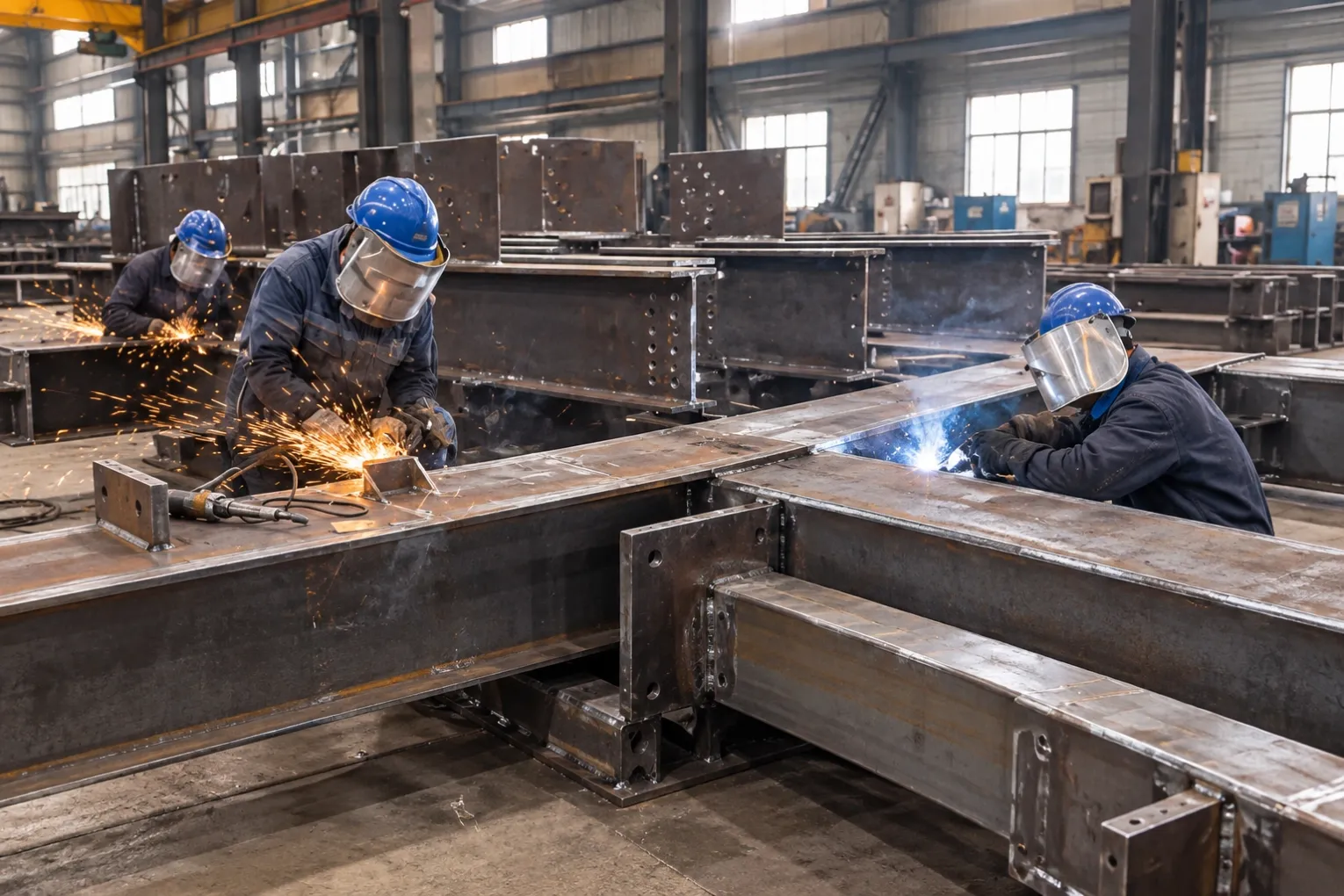
Inspection gets heavier too. A thicker joint needs more weld metal, more passes and more checking, and its bevel preparation is a job of its own — see our bevel cutting guide.
How Does Thickness Stretch Lead Time?
Lead time stretches in four places, and thickness touches all of them.
Material comes first. A standard gauge your supplier stocks can go on the machine the same week; an unusual thickness has to be ordered, and the wait for steel can outlast the cutting itself.
Cutting time comes second. Slower cutting means more machine hours per part, and more machine hours means a longer queue when the shop is busy — a thick-plate job does not only take longer to cut, it also waits longer for a free slot.
Downstream steps come third. Bevel preparation, welding, machining and surface treatment each add days, and thicker plate adds work at most of them. Published fabricator guides put typical times at roughly one to three days each for cutting and welding, two to five for surface treatment. Those are other suppliers' ranges, not a promise — but they show the shape of the schedule: the steps stack.
Rework comes last, and it is the one buyers forget. A thickness that turns out wrong at fit-up or inspection sends the part back to the start, and a re-cut costs the slowest machine time all over again. An incomplete drawing adds at least a day while the supplier waits for a missing dimension — so the fastest way to shorten lead time is a complete RFQ, not a faster machine.
How Do You Pick the Right Thickness Before You Ask for a Quote?
The cheapest thickness is the thinnest one that honestly meets the requirement — wider than strength alone: load, stiffness, wear and corrosion allowance, and whether the joint can be welded and inspected. A part thicker than it needs to be pays for steel and machine time it will never use.
A formed feature can beat a thicker flat plate. A bent flange or a rib on thinner sheet can give the same stiffness as a thicker flat plate, with less weight and a faster cut. Not always possible, but worth checking before the thickness is frozen — the saving is in both material and machine time.
Standardise gauges across a part family. If five parts can share one thickness, the supplier nests them on fewer sheets and wastes less steel. Commonly stocked gauges also cut out the wait for ordered material — the biggest avoidable delay on a thick-plate job.
Agree the tolerance with the drawing, not from memory. Plate thickness has its own mill tolerance, and one tighter than the process can hold is quoted as slower cutting and more inspection. State it on the drawing, and ask whether it is driving the price before you tighten it.
Talk to the supplier before the drawing is frozen. A five-minute conversation about which thickness keeps the part on the faster method, or which gauge is in stock, is cheaper than a re-quote. Thickness is a design decision with a price attached — make it with the people who will cut it.
What Should Your RFQ Say About Thickness?
A quote that comes back with questions instead of a price is usually missing one of five things — and thickness is the first of them.
First, state the grade, the thickness and its tolerance. A thickness without a grade is unquotable: cutting speed and steel price both depend on the material. A thickness without a tolerance is unpriceable: the supplier cannot tell whether standard cutting will hold it.
Second, give hole sizes relative to the thickness. If a hole is smaller than the plate is thick, say so, and say whether a drilled finish is acceptable, so the supplier can quote the second operation instead of discovering it after the first cut.
Third, state the edge and finish you need. A weld-ready edge, a ground edge and an as-cut edge are three different prices. If the edge will be welded, say so, so the bevel preparation is quoted with the cutting, not as a surprise later.
Fourth, give the quantity and the date you need the parts. Thickness drives machine hours, and machine hours drive the schedule, so a quantity and a needed date let the supplier say honestly whether the job fits, or whether another thickness would fit sooner.
Fifth, ask the supplier to flag any thickness that forces a method change or a secondary operation. When two quotes come back far apart, ask each supplier for the mass of steel consumed per part before you argue about the rate. It is almost never a rate difference; they are different gauges, nest yields or assumptions about secondary work — the mass per part usually explains the gap in one line.
Does doubling plate thickness double the price?
Not exactly. The steel doubles, because mass doubles; the machine time more than doubles, because cut speed falls faster than thickness rises — so on a simple flat part the price roughly follows the steel, and on a complex part it can rise by more than double.
What thickness is cheapest to laser cut?
The thinnest that meets your requirement, in a standard gauge your supplier stocks. Staying in the fast laser range avoids a switch to a slower method and its secondary work. If the part needs stiffness, check whether a formed feature on thinner sheet does the job first.
How long will thick-plate parts take?
It depends on material availability, the cutting method and the steps after cutting. Published ranges run from one to three business days for simple laser-cut parts to four to six weeks for full production runs. Your own lead time is assessed per project. A complete RFQ — grade, thickness, tolerance, quantity, needed date — is the fastest way to a firm answer.
Send your drawing with the thickness, grade, quantity and the date you need the parts, and ask your supplier to confirm the cutting method and lead time for that thickness. If you are still choosing, ask which thickness keeps the part on the faster process and which gauge is in stock — a small change now is cheaper than a re-cut later — and read our bevel cutting guide first if the edge will be welded. VEHOON cuts steel plate to customer drawings, with further CNC machining, welding and assembly available when required, and lead time assessed per project.