Manufacturing Guides
Surface Finish for Machined Steel Components: What to Specify and Why
A practical guide to specifying surface finish on machined steel components: what roughness measures, which surfaces need a finish requirement, how it drives cost, and how to state it on a drawing.
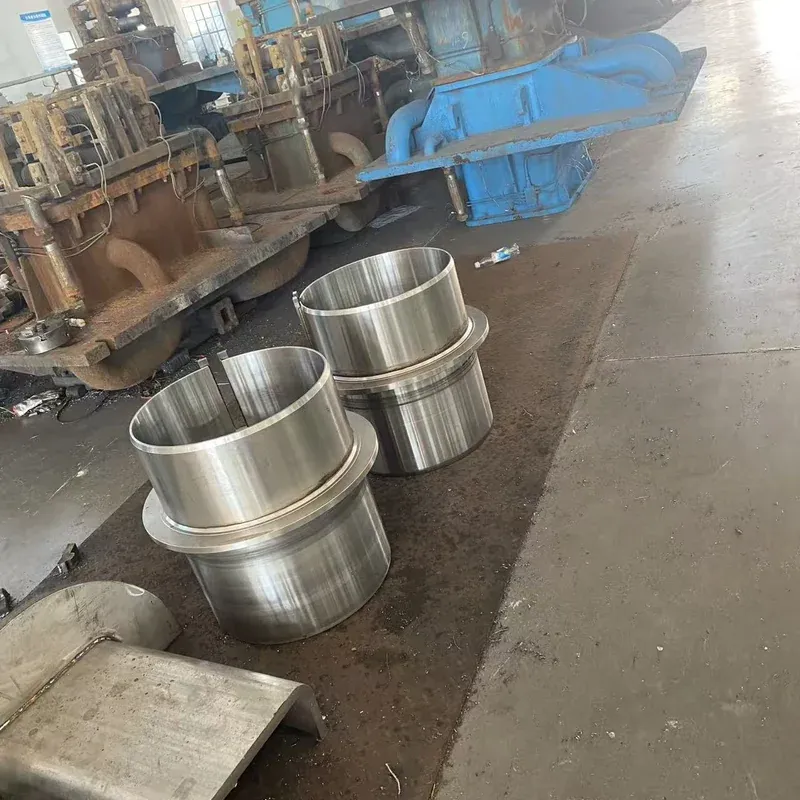
Surface finish is one of the few specifications on a machined steel component that a buyer can easily pay too much for. A fine surface can multiply machining time, require additional operations and, on a part where the surface does not affect function, deliver nothing that the equipment will ever notice.
This guide explains what surface finish actually measures, which surfaces need it, how to write the requirement so a supplier can meet it, and where the practical limits of a machining-only process lie.
What Surface Finish Actually Measures
Surface finish describes the texture of a machined or cut surface at a small scale — the fine peaks and valleys left by the cutting tool. It is separate from two other things that buyers often confuse with it:
- Dimensional accuracy — whether a feature is the right size. A bore can be exactly the right diameter and still have a rough surface.
- Geometric accuracy — whether a surface is flat, parallel or square. Flatness and surface finish are independent; a surface can be perfectly flat and still coarse.
- Waviness — longer-wavelength deviation caused by machine deflection, vibration or workholding. Waviness is not captured by a roughness value but is visible and can matter on sealing faces.
Keeping these separate matters because they are produced and verified differently. Specifying a roughness value does not by itself make a bore round, or a face flat.
How Roughness Is Expressed
Roughness is normally stated as Ra — the arithmetic average deviation of the surface profile from its mean line, measured in micrometres. A lower Ra means a smoother surface.
Two practical points about reading an Ra requirement:
- Ra describes average roughness, not the worst peak. Two surfaces with the same Ra can behave differently in a sealing or bearing application because their peak profiles differ.
- Ra is a small-scale measure. It does not capture waviness or form error, so an Ra callout alone does not fully define a functional surface.
Other roughness parameters exist — Rz, Rq, Rmax and others — which describe peak height or other aspects of the profile. They are used when a smooth average is not sufficient, for example where a sealing lip must not be cut by isolated peaks.
Which Surfaces Actually Need a Finish Requirement
The question to ask for each surface is functional, not cosmetic: does anything else touch it, seal against it, slide on it, transmit load through it, or risk fatigue from it?
Surfaces where a finish requirement usually earns its cost:
- Sealing faces — O-ring grooves, gasket faces and hydraulic sealing surfaces, where both finish and waviness affect whether the seal holds
- Bearing seats and bores — where surface texture affects fit, contact and running behaviour
- Sliding or mating surfaces — where roughness contributes to friction and wear
- Fatigue-sensitive features — where a coarse surface can act as a stress raiser on components that see cyclic loading
- Interfaces where a coating or adhesive will be applied — where the required texture is set by that process, not by appearance
Surfaces where a finish requirement usually does not:
- The cut face of a plasma or flame-cut edge that will not be a functional surface. A machining allowance, not a finish value, is the right requirement here.
- Non-functional outer faces of a weldment, where the requirement is usually visual and best stated as such
- Surfaces that exist only to provide clearance or that are never touched
How a Finish Requirement Drives Cost
For most machined steel components, the cost driver is not the roughness value itself but what achieving it demands.
- Finer finish usually means a separate, slower finishing pass rather than a heavier cut. The material removal rate drops sharply as the finish requirement tightens.
- It may force better tooling and shorter tool life, since a worn tool cannot hold a fine finish consistently.
- It can require a more rigid setup, or a lighter, gentler operation, to avoid the vibration that shows up directly in the surface.
- Very fine requirements may need an additional process, a different machine, or hand finishing — each of which adds cost, time and a step that must be inspected.
The practical consequence: a finish requirement is only worth its cost on surfaces where function depends on it. Applying one value everywhere on a drawing is one of the most common and most expensive specification habits.
How to State the Requirement on a Drawing
A finish requirement works only when it is unambiguous and achievable in the planned process. Useful to include:
- State the requirement only on the surfaces that need it, and identify them clearly by number or symbol.
- State the value with its parameter — Ra, not just a number.
- Say what the surface is for. A note such as "sealing face" tells the supplier more than a bare value and lets them challenge it if the sequence makes it impractical.
- State whether the requirement applies before or after any coating, plating or heat treatment, since these change the surface.
- State whether the requirement applies to a specific area or to the whole surface.
- Include the inspection expectation — whether the finish is to be measured and reported, and by what method.
It is also worth deciding what happens where the surface is produced by cutting rather than machining. A flame-cut or plasma-cut face has its own characteristic texture, and if a functional requirement is written for such a face, the practical route is normally to machine it rather than to tighten the cutting process.
The Limit of a Machining-Only Process
It is worth being explicit about where one process ends and another begins, because finish requirements are one of the places where expectations and capability most often diverge.
CNC milling, drilling and machining with a vertical machining centre produce machined surfaces with a characteristic texture determined by the tool and the pass. These processes cover the vast majority of functional surfaces on custom steel components, and on most components there is no need to go further.
Very fine finishes and the correction of surface texture by abrasion are a different family of process. If a drawing asks for a surface that cannot be produced by milling or turning alone, the right move is to raise it with the supplier before the order rather than after delivery — the requirement may need a different process, a different supplier, or a rethink of whether it is really needed.
For components where a finish requirement exists alongside dimensional and geometric requirements, the manufacturing route has to plan all three together. Vertical machining centre work and CNC milling are the processes that normally establish a machined surface, and the finishing pass is planned as part of the same operation rather than added afterwards.
What to Put in the RFQ
- Which surfaces carry a finish requirement, and what each surface is for
- The roughness parameter and value, with the standard or convention you are working to
- Whether the requirement applies before or after coating, plating or heat treatment
- Whether any surface is to be left as cut, and whether that face is functional or visual
- Which features will be inspected and reported, and by what method
- Any requirement that may sit outside normal machining, flagged so the supplier can respond before quoting
Stating these removes the two failure modes that cost buyers most: paying for finish on surfaces that do not need it, and discovering after delivery that a functional requirement could not be met by the process that was quoted.
Summary
Surface finish is a functional requirement, not a default. Decide which surfaces matter, state the value with its parameter and its purpose, and keep it separate from dimensional and geometric requirements so the manufacturing route can address each on its own terms.
Send your drawings and technical requirements to sales@vehoon.com for a manufacturing review. We will review the machining route alongside the finish and tolerance requirements, and flag any surface where the requirement needs a different process before it becomes a problem.