Manufacturing Guides
Repeat Orders: Working With a Steel Fabrication Supplier After the First Order
How to structure a working relationship with a machining and fabrication supplier from the second order onwards: drawing revisions, escalation, volume changes and what to agree in writing.
Most sourcing guides tell a buyer how to find a supplier. Very few explain what happens after the first order — which is where most of the cost and nearly all of the frustration actually live. A supplier who quoted well and delivered well on a prototype can still be a poor long-term partner if the working relationship was never set up to handle change, escalation or repeat volume.
This guide is about the second order onwards: how to structure a working relationship with a machining and fabrication supplier so that problems surface early and repeat work stays predictable.
Why the Second Order Is Harder Than the First
The first order has an unusual amount of attention on it. Drawings are new, questions get asked, and both sides are careful. The second order arrives with the assumption that everything is settled — and that assumption is where things break.
- Drawings drift. A revision is issued, but the supplier is still working from the revision they were quoted against. Nobody notices until the parts arrive.
- Assumptions harden. What was clarified verbally on the first order is not written down anywhere, so the second order reverts to whatever the drawing literally says.
- Attention drops. The part is now "known", so it moves through the shop without the scrutiny the first one received.
- Volume changes the route. A process chosen for one piece is not necessarily the right process for twenty, and nobody re-examines it.
None of these are failures of capability. They are failures of setup.
What to Agree Before the Second Order
Five things are worth settling explicitly, in writing, once the first order has been delivered and reviewed:
- Which drawing revision is now the reference. State it, and state what happens when a new revision is issued — who is told, and how quickly the change is reflected in price and lead time.
- Which decisions from the first order are now standing. If a tolerance was relaxed, a surface left as-machined, or a datum changed during the first run, that decision needs to be recorded rather than remembered.
- What "the same part" means. For a repeat order, the supplier needs to know whether the same route, the same material source and the same inspection scope are expected — or whether the buyer is open to the supplier proposing a better route.
- How changes are priced. A small drawing change that seems trivial to the buyer can add a setup, a fixture or an extra operation. Agreeing the principle in advance avoids a negotiation on every revision.
- Who the technical contact is on each side. Not the sales contact — the person who can answer a manufacturing question. Relationships fail when questions go to someone who forwards them.
Handling Drawing Revisions Without Rework
Revision control is the single most common source of scrap in repeat work. A practical rule set:
- One revision, one complete file set. When a revision is issued, send the whole package rather than a change note, so there is no ambiguity about what is current.
- Confirm receipt, not just sending. A revision that was emailed but not acknowledged is not a revision that has taken effect.
- State the effective point. Does the change apply to parts already in production, to the next batch, or from a stated date? "As soon as possible" produces disagreement later.
- Record what changed and why. A one-line note on each revision — "hole pattern moved 2 mm to clear the new motor" — makes it far easier to judge later whether a part is wrong or was made to an older drawing.
Escalation: What Happens When Something Is Wrong
Every supplier relationship eventually has a bad part. What separates a workable relationship from a painful one is whether the response was agreed in advance.
- Who is told first. The buyer's technical contact, not a general inbox. A problem reported to a sales address can take days to reach someone who can act.
- What evidence is needed. Photographs, the measurement that failed, the drawing revision the part was made to, and the quantity affected. Asking for this up front shortens every dispute.
- What the default remedy is. Rework, replacement, or credit — and who decides. Leaving this open turns a small defect into a negotiation.
- What the supplier does about cause. A replacement part fixes the shipment; an explanation of what allowed the defect fixes the next one.
The point of agreeing this is not distrust. It is that a defined process removes the emotional load from a technical problem, which is when both sides make better decisions.
Volume, Batch Size and Route Changes
A route that suits one component is not automatically right for a batch, and the supplier is usually better placed to notice than the buyer. Two things follow:
- Tell the supplier what the volume is likely to be. A first article that may become a recurring order is planned differently from a one-off, and a supplier who knows this can price the first one more sensibly and prepare the route.
- Ask whether the route should change. At higher volume, a different cutting method, a fixture, or a change in the machining sequence may reduce cost without touching the drawing. A supplier who raises this is worth keeping; one who silently absorbs it is not helping either side.
What a Good Supplier Relationship Looks Like in Practice
- Questions come before the quote, not after. A supplier who quotes an ambiguous drawing without asking is guessing.
- Bad news arrives early. A material delay or a process problem reported when it is discovered is manageable; the same news at the promised delivery date is not.
- The same person answers technical questions. Continuity is what turns a series of orders into a relationship.
- Records exist. Drawings, revisions, inspection results and decisions are retrievable, so a question about a part made eighteen months ago can be answered.
- Improvements are proposed. A supplier who suggests a cheaper or more robust route is engaged with the work rather than executing it.
Common Questions
Q: How many suppliers should I keep for the same part?
Two is usually the practical minimum for anything recurring — enough to keep pricing honest and provide continuity if one is unavailable, without splitting volume so thinly that neither supplier prioritises the work. A single source is a risk; four is usually wasted effort.
Q: Should I expect the same price on a repeat order?
Not necessarily the same, but it should be explainable. Material prices move, and a repeat order may carry less setup if fixtures already exist. What should not happen is an unexplained change in either direction.
Q: Is it reasonable to ask for the process route?
Yes, at the level of sequence rather than detail: cut, weld, machine, inspect, in what order, and which surfaces are machined after welding. That is enough to judge whether the route is sound without asking a supplier to disclose how they achieve it.
Q: What should I do if the first order went badly?
Establish whether the cause was the drawing, the process or the communication, before deciding. A defect caused by an ambiguous drawing will repeat with any supplier; a defect caused by a process decision is specific to this one. The answer determines whether changing supplier solves anything.
Q: How do I keep a good supplier interested in small orders?
Predictability helps more than volume. A supplier who knows roughly what is coming, on what schedule, can plan around small orders. Occasional large orders with no pattern are harder to fit than a steady small stream.
How VEHOON Works With Repeat Customers
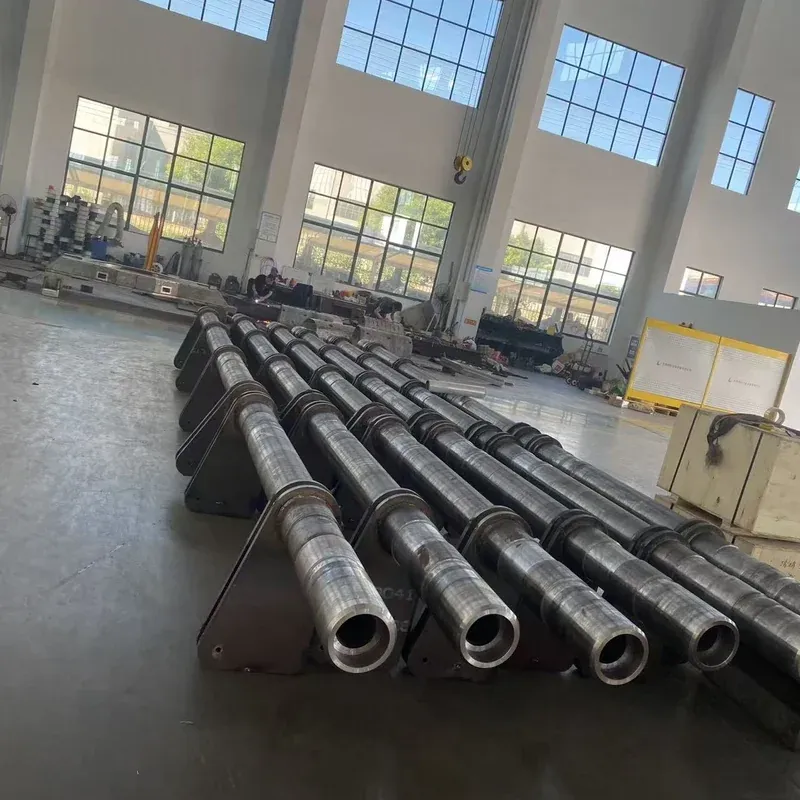
VEHOON produces machined and welded steel components to customer drawings, and reviews each order against the drawing before production — which is also where drawing revisions, machining scope and delivery stage are confirmed rather than assumed. Components move through cutting, CNC machining, welding and assembly in one workshop, so a repeat order keeps the same route and the same responsibility rather than being re-established with a new supplier each time.
For a first or repeat order, send the drawing and technical requirements through the contact form. For the preparation side, see how to prepare drawings for a steel fabrication RFQ; for the inspection side, how to inspect custom steel components before delivery.